
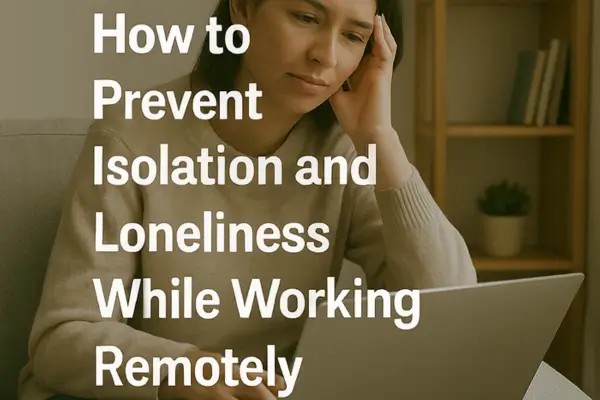
Remote work offers flexibility, freedom, and independence. But behind the scenes, many remote workers quietly struggle with something rarely discussed: isolation and loneliness.
Without hallway chats, lunch breaks with colleagues, or daily commutes, the social rhythm of office life disappears. Over time, that disconnection can affect your mood, confidence, motivation, and overall mental health.
In this article, we’ll explore practical ways to prevent loneliness and maintain meaningful connection—even when working miles apart from your team.
Why Loneliness Is So Common in Remote Work
Even if you’re surrounded by people at home or on video calls all day, you can still feel isolated. Loneliness isn’t about being alone—it’s about feeling emotionally disconnected.
Common reasons remote workers feel lonely:
- Limited face-to-face interaction
- Workdays filled with shallow communication (emails, Slack, etc.)
- Fewer social invitations or casual conversations
- Difficulty forming new friendships
- Living in a different time zone from teammates
And unlike burnout, loneliness often creeps in quietly, unnoticed until it’s deeply rooted.
Step 1: Acknowledge the Feeling Without Shame
The first step is naming what you’re feeling—and removing guilt or embarrassment.
Loneliness is not weakness. It’s a biological signal that you need connection. Just like hunger signals a need for food, loneliness signals a need for human interaction.
Admitting “I feel lonely” allows you to take action before it turns into anxiety or depression.
Step 2: Build a Social Routine Into Your Week
Just like work tasks, connection needs structure—especially in remote work.
Try:
- Scheduling one virtual coffee chat per week with a colleague or friend
- Joining a recurring online mastermind or community meetup
- Hosting a weekly “no-agenda” Zoom with remote peers
- Having regular check-ins with a mentor or accountability partner
Put connection in your calendar—don’t leave it to chance.
Step 3: Turn Passive Communication Into Human Connection
Slack and email can feel robotic. But with a little intention, they can become more personal.
Simple ways to connect deeper:
- Use voice notes instead of text when possible
- Start or end messages with something personal (“Hope your dog is doing better!”)
- Send appreciation messages for small wins
- Use emojis, GIFs, or humor to add warmth
Human tone makes even short messages emotionally nourishing.
Step 4: Take Work Calls With Cameras On (Sometimes)
You don’t need to show your face all day—but occasional video helps reduce emotional distance.
When it helps:
- Team stand-ups or brainstorm sessions
- 1-on-1s where personal topics come up
- Celebrating milestones or wins
- First-time meetings with new people
Seeing facial expressions builds trust and reminds your brain: you’re part of something bigger.
Step 5: Create a “Third Space” That’s Not Work or Home
When work and personal life blend in the same room, it’s easy to feel stuck. A third space—physical or virtual—can shift your mental state.
Examples:
- A local coffee shop or co-working space
- A weekly meetup group or class (in person or online)
- A hobby-based community (gaming, art, writing, fitness)
- Discord, Reddit, or Slack groups aligned with your interests
These spaces give you new conversations, energy, and identity.
Step 6: Move Your Body With Others
Exercise boosts mood—and doing it with people enhances connection.
Ways to combine movement and community:
- Join a virtual yoga or fitness class
- Sign up for a running or step challenge with coworkers
- Walk while talking on the phone with a friend
- Take classes or lessons in your city (dance, martial arts, etc.)
Your body and your brain both benefit from movement-based social contact.
Step 7: Take Initiative—Even If It Feels Awkward
Many remote workers wait to be invited. But connection often requires you to take the first step.
Ideas:
- Invite a colleague for a 15-minute coffee chat
- Start a social thread in your work chat (“What’s your weekend plan?”)
- Suggest a game or casual hangout
- Reach out to someone new in your industry just to connect
It may feel awkward at first—but it often leads to genuine relationships.
Step 8: Balance Deep Work With Social Breaks
If you spend hours in solo focus mode, your brain craves contrast.
To rebalance:
- Call a friend during lunch
- Respond to a voice note instead of typing
- Watch a live stream or podcast with chat interaction
- Use co-working rooms like Focusmate or Caveday
Social micro-interactions help prevent the emotional flatness that can creep into isolated workdays.
Step 9: Lean on Your Support System Outside of Work
Don’t expect your job to meet all your social needs. Look outward, too.
Reconnect with:
- Family members you haven’t called in a while
- Old friends you’ve lost touch with
- Local neighbors or community groups
- Volunteering opportunities or causes you care about
Every interaction adds to your emotional well-being bank.
Step 10: Monitor Your Mental Health With Intention
Loneliness can lead to deeper emotional struggles if left unchecked.
Ask yourself weekly:
- How connected do I feel to others?
- Have I had a meaningful conversation this week?
- Do I feel like part of a team or community?
- Is it time to reach out or schedule something social?
If things feel heavy or unmanageable, talk to a professional. Help is a strength—not a failure.
Final Thought: You Deserve to Feel Connected—Even From Afar
Remote work doesn’t have to be isolating. With small shifts in routine, communication, and mindset, you can build a rich and meaningful social life, even from behind a screen.
Don’t wait for connection to find you. Go create it—with intention, creativity, and heart.
You’re not alone—and you were never meant to work that way.