
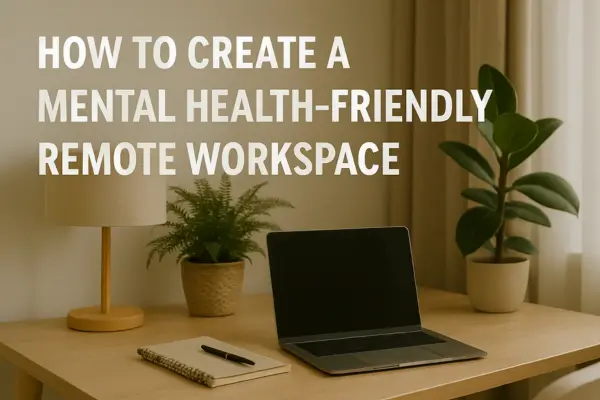
Your physical environment has a powerful influence on your mental state. For remote workers, the home workspace isn’t just where you work—it’s where you spend most of your time. That’s why creating a mentally supportive environment is one of the most important steps you can take for your well-being.
A cluttered, overstimulating, or uncomfortable space can increase stress, distract your mind, and drain your energy. A well-organized, calming workspace can improve your focus, boost your mood, and help you set healthy boundaries.
In this article, you’ll learn how to design a remote workspace that promotes emotional balance and supports your mental health.
Why Your Workspace Affects Your Mind
Your brain reacts to your surroundings more than you may realize. The colors, lighting, sounds, temperature, and even the layout of your space all influence your cognitive function, mood, and ability to regulate emotions.
Benefits of a healthy workspace include:
- Improved focus and clarity
- Reduced stress and overstimulation
- Easier task initiation and follow-through
- Clear separation between “work mode” and “rest mode”
- Increased feelings of safety and control
You don’t need a big home or fancy equipment. With some intentional choices, you can create a sanctuary for your mind—even in a small space.
Step 1: Choose a Dedicated Workspace
The first and most important step is to define where work happens.
Why this matters:
- Helps your brain switch between work and relaxation
- Establishes a boundary with other people in your home
- Triggers focus through environmental consistency
If you have a room:
Set it up as your full-time office and make it off-limits for non-work activities.
If you live in a small space:
Choose a specific corner, table, or even a foldable desk. Use a rug, curtain, or light change to visually divide the space.
Consistency is more important than size. Your brain will begin to associate this spot with clarity and productivity.
Step 2: Prioritize Natural Light and Air Flow
Natural light supports your circadian rhythm, improves sleep, and boosts mood. Fresh air also plays a huge role in reducing fatigue and mental fog.
Tips:
- Place your desk near a window
- Keep curtains open during the day
- Take short outdoor breaks
- Open the window for fresh air at least once daily
- Use plants to naturally purify the air
If you don’t have access to natural light, consider investing in a daylight lamp to simulate sunlight—especially during winter.
Step 3: Minimize Clutter and Visual Distractions
A cluttered space = a cluttered mind. Every item in your field of view competes for your attention.
Declutter by:
- Removing unused or unrelated items from your desk
- Using trays, organizers, or vertical shelves
- Hiding cables and tech clutter
- Keeping your desktop (physical and digital) tidy
Mental trick: End each workday by resetting your space. Put everything in its place so your next day starts fresh.
Step 4: Choose Soothing, Mood-Boosting Colors
Color psychology has proven effects on emotional well-being. The right palette can calm your nerves or energize your focus.
Color tips:
- Soft blues and greens promote calm and reduce stress
- Yellow adds warmth and optimism (in small doses)
- Neutral tones like beige or light gray reduce overstimulation
- Avoid harsh reds or deep blacks in work areas—they can increase anxiety
Add pops of color through decor, art, or accessories without overwhelming the space.
Step 5: Incorporate Biophilic Elements
Biophilic design—adding elements of nature—has been shown to reduce cortisol levels and enhance well-being.
Simple ways to do this:
- Add 1–3 indoor plants (snake plant, pothos, peace lily)
- Use wooden or natural textures (bamboo, rattan, cork)
- Display nature-themed art or photography
- Use a nature-scented diffuser (lavender, eucalyptus, cedarwood)
You don’t need a jungle. Even one plant can lower stress levels.
Step 6: Optimize Sound for Focus and Calm
Noise is one of the most overlooked triggers of stress in remote work.
To reduce noise stress:
- Use noise-canceling headphones
- Add a white noise machine or fan
- Play instrumental music or ambient nature sounds
- If possible, add rugs or curtains to absorb sound
On the flip side, some people work better with a little buzz. Test different environments (quiet vs. light background noise) to find your optimal sound zone.
Step 7: Pay Attention to Temperature and Comfort
Your brain can’t focus if your body is uncomfortable. Temperature, lighting, and ergonomics all play a part.
Checklist:
- Keep the space between 20–23°C (68–73°F)
- Use soft, layered lighting instead of harsh overheads
- Invest in a supportive chair or use a seat cushion
- Adjust screen height to eye level to prevent neck strain
- Keep your feet flat on the floor or on a footrest
Comfort is productivity.
Step 8: Personalize Your Space—Mindfully
You want your space to feel like yours, but not overwhelming. Personal touches can increase a sense of identity and positivity.
Ideas:
- A photo that brings joy
- A vision board or motivational quote
- Art that inspires calm or creativity
- An object that grounds you emotionally (a stone, candle, or trinket)
Avoid over-decorating. The goal is emotional connection—not visual noise.
Step 9: Use Lighting to Create Transitions
Lighting helps signal to your brain what mode you’re in—work or rest.
Try this:
- Use bright, white lighting during work hours
- Switch to warm, dim lighting after work
- Consider a smart bulb that adjusts throughout the day
- Use a desk lamp to create a spotlight for focus
These shifts support your mental transitions, especially in multi-use spaces.
Step 10: Establish a “Work Shutdown” Ritual
When you work and live in the same space, you need a clear “off switch.” Ending your day properly reduces lingering stress.
Ideas for a shutdown ritual:
- Close all tabs and apps
- Write tomorrow’s to-do list
- Tidy your workspace
- Turn off your work computer or monitor
- Light a candle or turn on a different lamp
- Say aloud, “Work is done for today.”
Over time, this anchors your nervous system and protects your personal time.
Final Thought: Your Workspace Should Support Your Mind, Not Strain It
You don’t need expensive tools or major renovations. A few intentional changes can transform your remote workspace into a refuge for your focus, creativity, and calm.
This is where your days happen. This is where your energy lives. Make it a space that reflects your best self—and supports your mental health every step of the way.